Early Foundations: Static Models and Their Limitations
My name is Christopher MacLean, and I have been involved in clinical biomechanics since the early 1990s. My career began primarily in foot and ankle biomechanics within the custom orthotic industry, where I developed a deep interest in how clinicians assess and interpret human movement. At that time, the prevailing approach relied heavily on static measurements to infer dynamic function. We now understand that this approach is inherently limited. Static measurements do not reliably reflect how individuals move in real-world conditions, and the assumption that static structure predicts dynamic behaviour has proven to be inconsistent at best.
In addition to static assessment, clinicians often relied on observational analysis, watching individuals walk on a treadmill or down a hallway. Even with the addition of slow-motion video, the level of detail available was insufficient to accurately identify the mechanisms underlying injury or to confidently guide therapeutic interventions. These methods, while foundational at the time, lacked the resolution, objectivity, and repeatability required to truly understand human movement at a clinical level.
Bridging the Gap Between Research and Practice
These limitations became a central focus of my academic and professional journey. During my doctoral work, I pursued a core question: how do we bridge the gap between the precision and rigor of academic biomechanics laboratories and the practical demands of clinical and athletic environments? Academic labs provide highly accurate and comprehensive analyses, but they are resource-intensive, complex, and often inaccessible to everyday practitioners. Conversely, clinical environments require tools that are efficient, scalable, and economically sustainable - yet historically, these tools have lacked sufficient accuracy and depth.
Building a World-Class Biomechanics Lab
Following my PhD studies at the University of Massachusetts Amherst, I was invited to design and direct a human performance laboratory in British Columbia - Fortius Lab, part of Fortius Sport & Health in Burnaby. The mandate was ambitious: build a world-class facility capable of serving athletes of all levels, from recreational participants to elite performers. The goal was to support injury prevention, rehabilitation, and performance optimization through integrated, data-driven insights.
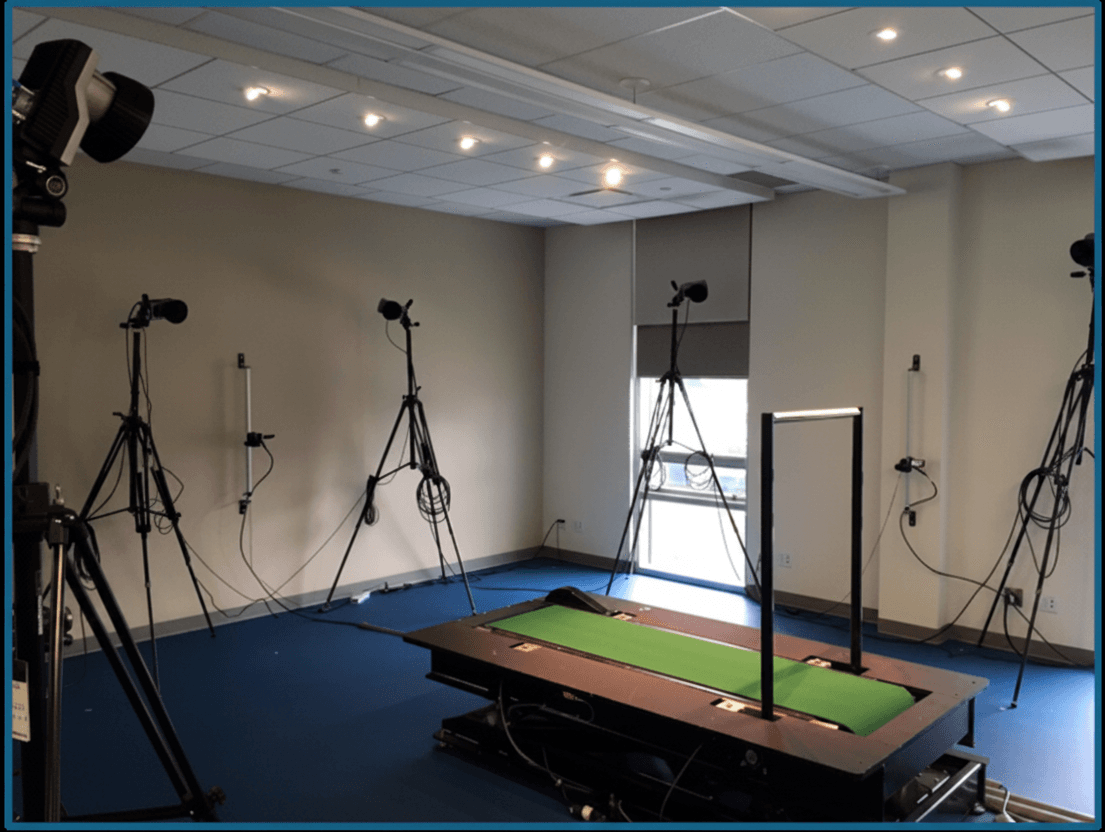
A cornerstone of this lab was its clinical biomechanics capability. We implemented marker-based motion capture systems, considered the gold standard in academic research, combined with force measurement technologies, including instrumented treadmills and embedded force platforms. These systems enabled detailed analysis of a wide range of movements, from walking and running to jumping and cutting maneuvers. The objective was to identify biomechanical variables that could contribute to injury risk or performance limitations and to integrate these findings into multidisciplinary care and training strategies.
Clinical Impact and Real-World Outcomes
From a clinical outcomes perspective, the lab was highly successful. We conducted comprehensive analyses on approximately 1,600 running athletes and more than 300 post-surgical ACL patients returning to sport. These insights supported clinicians and performance teams in making more informed decisions around rehabilitation progression, return-to-play readiness, and performance optimizations.
The Challenge of Scalability in Biomechanics
However, the experience also exposed a fundamental challenge that continues to exist within biomechanics today: sustainability and scalability. The infrastructure required to support high-quality motion analysis was substantial. The capital cost to equip the lab - approximately $500,000 in today's terms - combined with the time-intensive nature of data collection, processing, interpretation, and reporting, created a model that was difficult to scale beyond specialized environments. Even with philanthropic support, this level of investment and operational complexity is not feasible for most clinical practices.
In addition, the reliance on marker-based systems introduced further constraints. These systems require significant setup time, technical expertise, and controlled environments, limiting their practicality in routine clinical workflows. While they provide exceptional accuracy, their lack of operational efficiency prevents widespread adoption.
Discovering a New Direction: Introduction to Yāna Motion Lab
It was during this period that I was introduced to Yāna Motion Lab. At the time, the technology was still in its early stages, but it immediately stood out as a potential solution to the longstanding challenges I had encountered throughout my career. We began exploring validation work collaboratively, and it became increasingly clear that Yāna represented a new direction for clinical biomechanics.
Defining the Requirements for Modern Biomechanics Systems
From my perspective, any system intended for real-world clinical or performance use must satisfy several key criteria.
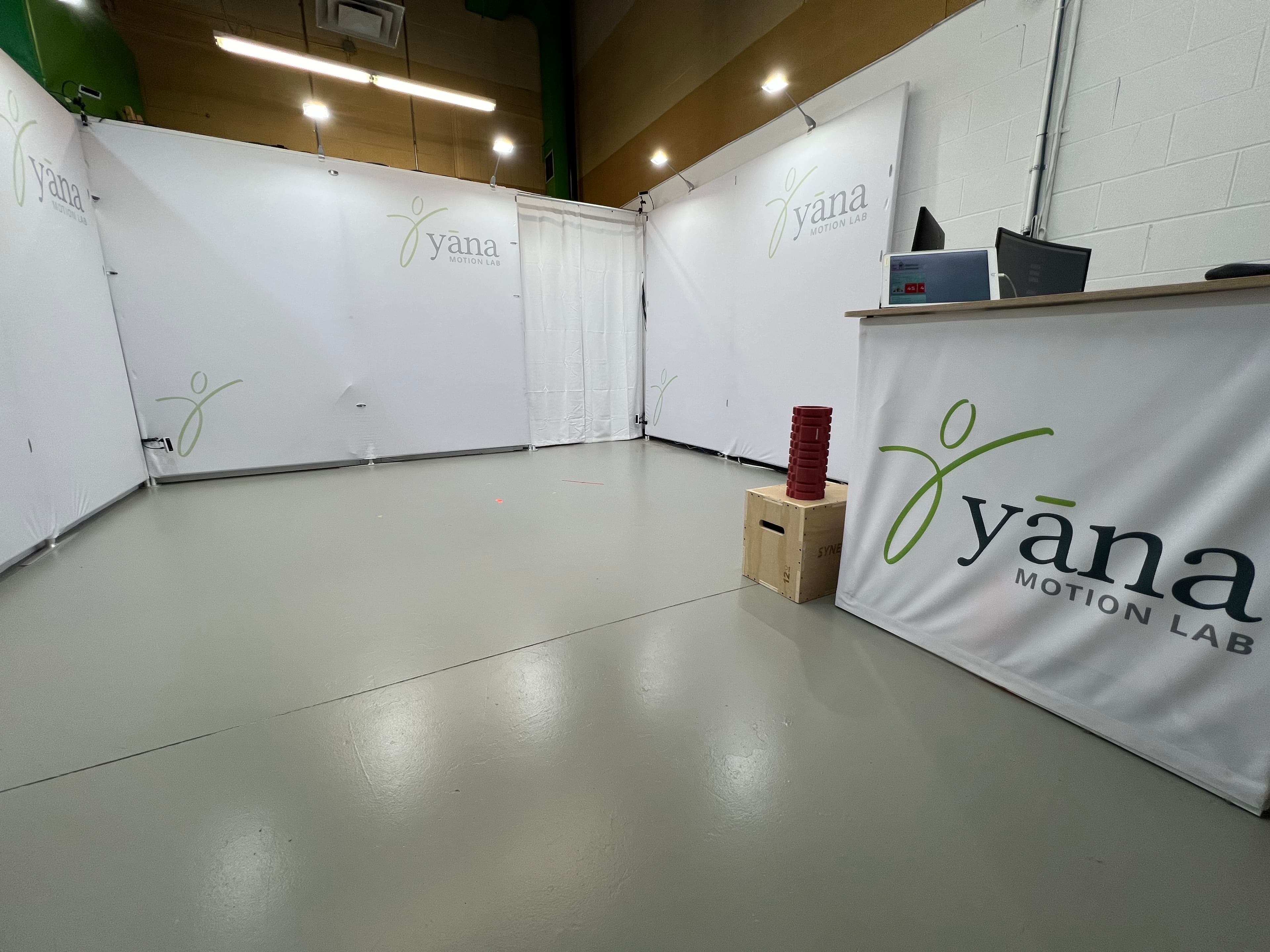
- Compact Clinical Footprint - Operate within a small physical footprint, recognizing the spatial limitations of most clinical environments.
- Accessible & Sustainable Investment - Capital investment must be realistic, with a clear and achievable return on investment to support financial sustainability or cost-effective access.
- Efficient 3D Biomechanical Intelligence - System must deliver true three-dimensional biomechanical analysis with efficient data capture, processing, and reporting workflows.
How Yāna Meets and Exceeds These Requirements
Yāna Motion Lab meets - and in many respects exceeds - these requirements. It provides clinically meaningful, three-dimensional kinematic analysis within an operationalized system that is both efficient and scalable. By leveraging markerless motion capture and advanced processing capabilities, Yāna significantly reduces the barriers associated with traditional motion analysis. Setup is streamlined, data collection is rapid, and outputs are generated in a timeframe that aligns with real clinical workflows.
The Importance of True 3D Biomechanical Analysis
From a biomechanical standpoint, one of the most critical factors is the accuracy, reliability, and repeatability of the data. Yāna delivers on all three. Importantly, it captures motion across all three planes, including the transverse plane, which is essential for understanding many injury mechanisms. There are solutions in the market that attempt to approximate three-dimensional analysis using single-camera systems, but these approaches are fundamentally limited. True three-dimensional kinematic analysis requires multiple synchronized cameras to accurately capture complex joint and segment rotations.
The ability to measure transverse plane motion is particularly important in injury prevention and management. Many common injuries involve rotational components - such as femoral and tibial internal rotation - that cannot be adequately assessed without comprehensive three-dimensional data. By addressing this requirement, Yāna provides clinicians with a more complete and accurate understanding of movement patterns.
Unlocking Longitudinal Movement Insights
Beyond the technical capabilities, Yāna introduces a critical advancement in accessibility and continuity of care. Movement data can be captured efficiently, stored securely, and accessed across multiple platforms. This enables longitudinal tracking of individuals over time, establishing baselines, monitoring rehabilitation progress, and evaluating performance adaptations. The ability to compare movement data across sessions provides valuable insight into how individuals respond to interventions and how their movement patterns evolve.
This longitudinal perspective is transformative. Rather than relying on isolated assessments or subjective interpretation, clinicians and practitioners can now base decisions on objective, repeatable data collected over time. This improves the precision of interventions, enhances communication between stakeholders, and ultimately leads to better outcomes for patients and athletes.
Closing Perspective — Defining the Future of Movement Assessment
What Yāna Motion Lab represents is not simply an incremental improvement in technology - it is the realization of a long-standing objective within clinical biomechanics: the ability to deliver research-grade insight in a practical, scalable, and clinically integrated format. For decades, there has been a clear divide between what is possible in controlled laboratory environments and what can be implemented in everyday practice. Yāna effectively eliminates this divide. It translates the rigor of biomechanical science into a system that can be deployed routinely, efficiently, and at scale.
This has significant implications for how movement health is understood and managed. Objective, high-quality movement data is no longer limited to specialized labs or elite athletes. It becomes accessible to a broader population - across healthcare, rehabilitation, wellness, and performance settings. This democratization of biomechanical insight enables earlier identification of risk, more precise monitoring of recovery, and more informed decision-making at every stage of the movement health continuum.
Equally important is the shift toward longitudinal measurement. Yāna enables a model where movement is not assessed once but continuously understood over time. This creates a dynamic picture of an individual's biomechanics, capturing change, adaptation, and response to intervention in a way that has not been previously achievable in routine practice. From a clinical and performance standpoint, this represents a fundamental evolution. Decision-making can now be grounded in objective evidence rather than subjective observation. Interventions can be validated through measurable outcomes. Communication between clinicians, therapists, and clients becomes more aligned, as all stakeholders are working from the same data-driven foundation.
In this context, Yāna Motion Lab is not simply a tool - it is an enabling platform for a new standard of care. It allows biomechanics to move from a specialized, episodic service to an integrated, continuous component of health and performance management.
Having spent decades working at the intersection of clinical practice and advanced biomechanics, it is clear to me that this is the direction the field has been moving toward. Yāna has achieved what many have attempted: it has made accurate, reliable, and actionable movement assessment both practical and scalable.
For clinicians, practitioners, and organizations seeking to better understand and manage human movement, this represents a pivotal moment. Yāna Motion Lab is not just participating in the future of movement assessment - it is actively defining it.